INDUSTRIAL CONNECTIVITY COMPARISON
A Modern Kepware Alternative for Industrial Data Integration
If you are evaluating an alternative to Kepware for industrial data integration, vNode is a software industrial data platform designed to connect OT devices with SCADA, databases, MQTT, cloud and enterprise applications. It supports Windows, Linux and ARM deployments, unlimited tags and connections, web-based configuration, multi-protocol connectivity and resilient OT-to-IT architectures. Kepware remains a strong option when its broad driver ecosystem or an established Kepware deployment is central to the project.
1 Edge platform
Collect data from industrial devices at the edge using native protocols.
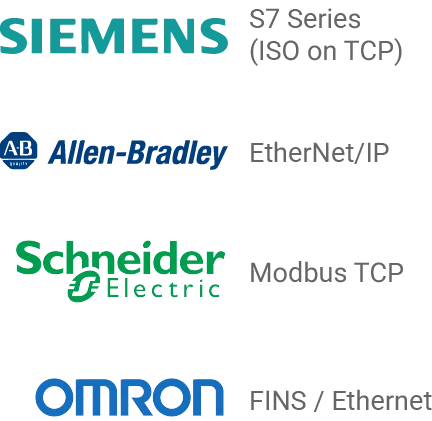
Industrial
Data

2 Process with vNode
Process, transform and normalize data for IT/OT systems.
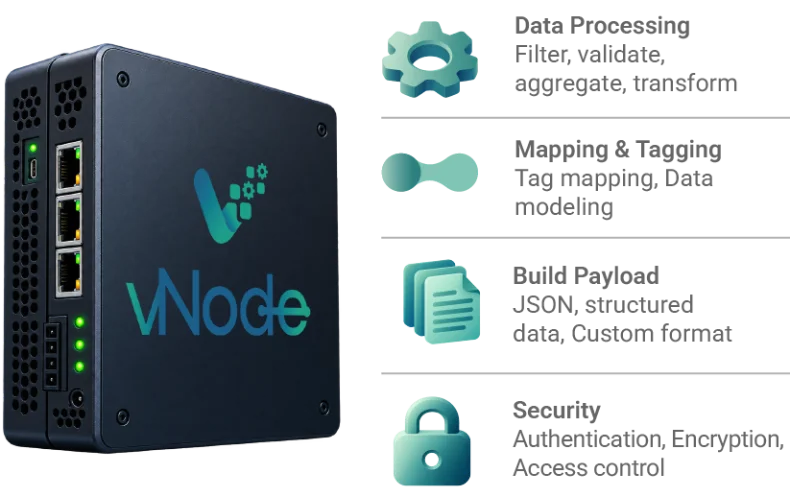
Publish
Data
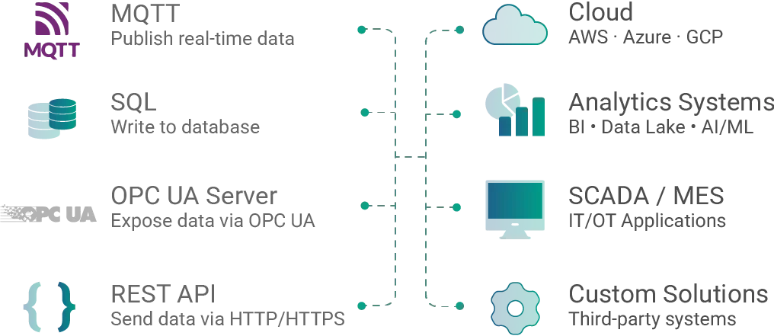
3 Publish to multiple destinations
Send the processed data to the required destination(s) using standard protocols.
START WITH THE REQUIREMENT
What Are You Actually Evaluating?

Need a Very Broad Legacy Driver Library?
Kepware’s mature driver ecosystem may be important for niche or legacy devices.

Need Linux/ARM Edge Deployment?
Evaluate vNode’s native cross-platform architecture.

Need Resilient OT-to-IT/Cloud Pipelines?
Compare MQTT, Store&Forward and multi-site architecture.

Already Have Kepware?
Replacement is not mandatory. Coexistence or phased migration may be the better architecture.
WHY EVALUATE ALTERNATIVES
Why Engineers Look for a Kepware Alternative
A Kepware alternative search is usually triggered by a concrete engineering requirement, not a preference for one brand over another. Compare products against the exact protocols, operating systems, resilience, security and IT destinations your project needs — not every project needs to replace Kepware.

Platform / OS Requirements
Windows-only server standardization may not fit projects that require Linux or ARM edge hardware.

Deployment Architecture
Single-server vs. distributed multi-site OT-to-IT architectures change the evaluation.
MQTT / Cloud Integration
Modern projects often need MQTT, REST, SQL, cloud and AI pipelines in addition to OPC connectivity.

Resilience
Remote sites, unreliable WAN links and high-availability requirements can change the architecture.

Licensing / Scale Model
Tag growth and connection count can change the economics of a per-tag or tiered licensing model.

Web-Based Management
Browser-based configuration affects remote and multi-site operations.

Project-Specific Protocols
The exact drivers a project requires — not a general brand comparison — should drive the decision.
AT A GLANCE
vNode vs Kepware at a Glance
This comparison deliberately avoids simplistic “winner” labels. The correct choice depends on the exact Kepware product, drivers and project architecture. Every Kepware statement here reflects current PTC documentation; every vNode statement reflects current vNode documentation.
vNode
Windows, Linux x86-64, ARM.
Kepware / PTC
Classic Kepware Server: Windows; newer Kepware Edge/Kepware+ products add Linux scenarios.
vNode
vNode states unlimited tags and connections.
Kepware / PTC
PTC states many products have no inherent tag/device limits; some are tiered.
vNode
Embedded web UI.
Kepware / PTC
Varies by Kepware product/generation.
vNode
Mainstream industrial/IT/IoT protocols; growing library.
Kepware / PTC
150+ drivers in current Advanced Manufacturing Suite.
vNode
MQTT plus other IT/cloud modules in the vNode platform.
Kepware / PTC
MQTT capabilities exist through specific Kepware drivers/plugins/products; some suites exclude IoT Gateway.
vNode
Disk-based mechanisms documented in vNode 1.22 for relevant destinations/architectures.
Kepware / PTC
Capability/behavior depends on Kepware component and configuration.
vNode
Reverse connection, TLS, authentication, data-diode-ready patterns documented by vNode.
Kepware / PTC
Kepware provides security features; architecture differs by product/component.
vNode
Cross-platform OT/IT data architecture and scaling model.
Kepware / PTC
Very broad, mature industrial driver ecosystem.
Need the full technical comparison? See vNode vs KepServerEX: Complete 2026 Comparison for Industrial Automation Engineers for deeper protocol-by-protocol and licensing detail.
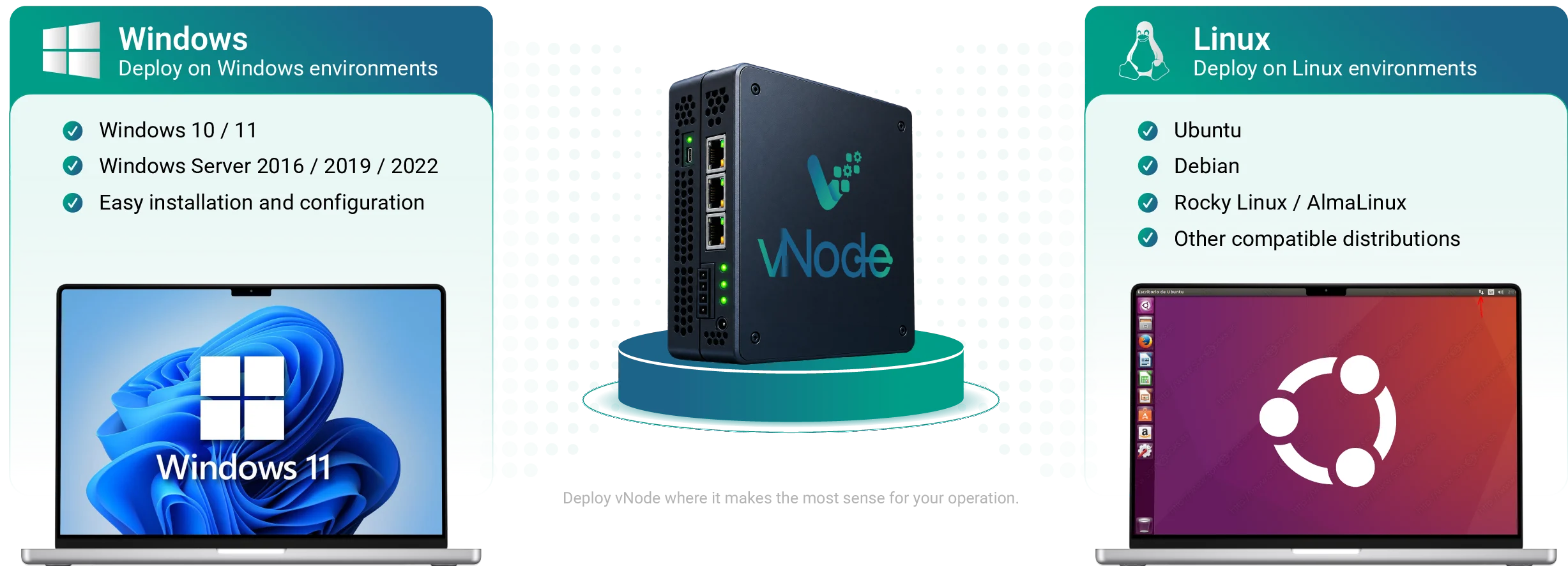
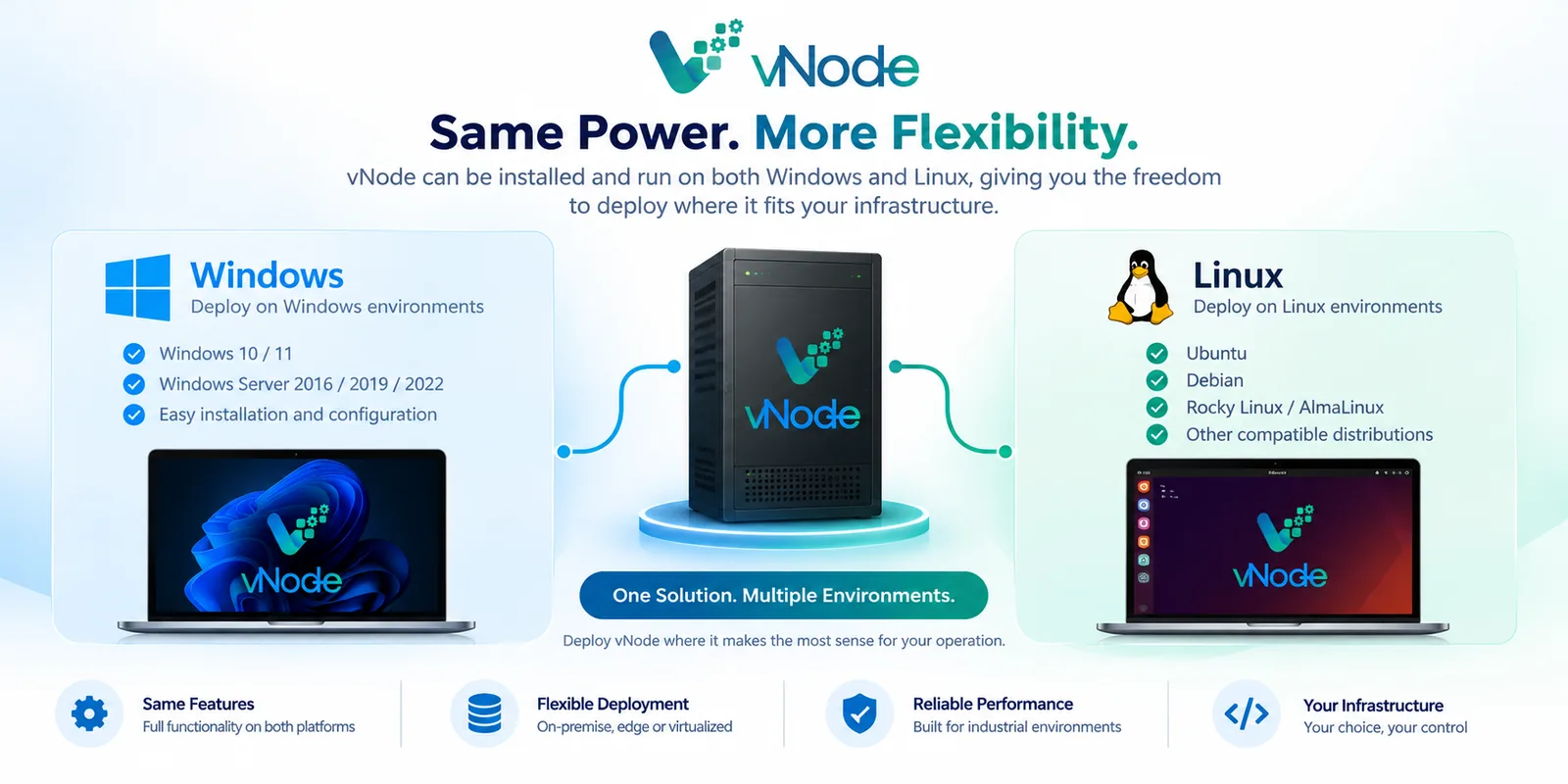
Same Power. More Flexibility.
vNode can be installed and run on both Windows and Linux, giving you the freedom to deploy where it fits your infrastructure.

Same Features
Full functionality on both platforms

Flexible Deployment
On-premise, edge or virtualized

Reliable Performance
Built for industrial environments
Your Infrastructure
Your choice, your control

Deployment: Windows, Linux and ARM
vNode uses the same industrial data platform across Windows, Linux x86-64 and ARM systems, making it suitable for server, IPC and embedded-edge architectures. When comparing against Kepware, specify the exact product: classic Kepware Server/KEPServerEX and newer Kepware Edge/Kepware+ do not have identical platform requirements.
A CLOSER LOOK
Protocols, Integration, Resilience and Architecture
Industrial Protocol Connectivity
Kepware’s broad and mature driver coverage is a genuine strength. vNode focuses on mainstream OT protocols plus modern OT/IT destinations — always check your exact driver requirement against both platforms.
MQTT, REST, SQL and Cloud Integration
Compare architecture and packaging rather than a simplistic yes/no table. MQTT capability in Kepware depends on the exact driver/plugin/suite; vNode includes MQTT and other IT/cloud modules in the same platform.
Tags, Connections and Licensing
vNode states an unlimited-tag/unlimited-connection model. For Kepware, many products are unlimited while some packages are tiered — pricing depends on the exact drivers/plugins/packages in use.

Store&Forward and Data Resilience
vNode’s documented disk-based Store&Forward applies to specific destinations and architectures. Compare only against the exact Kepware component and documentation being cited.

High Availability and Distributed Architectures
vNode supports Primary/Backup and multi-site architectures. Kepware redundancy products vary — media redundancy and server redundancy are distinct concepts, not one feature.
OT Cybersecurity and Network Architecture
vNode documents reverse connection/outbound-only and data-diode-ready patterns. This is a comparison of concrete architectures and documented controls, not a claim that Kepware is insecure.
Web-Based Engineering and Remote Management
vNode’s browser-based configuration affects remote and multi-site operations. Compare with the exact current Kepware product being evaluated.
Fit, Not Hype: When Each Platform May Make Sense

Kepware May Fit When...
- You require a niche or legacy device driver already available in its mature ecosystem.
- Your plant is standardized on Kepware and existing integrations are stable.
- Your engineering team has deep Kepware knowledge and Windows infrastructure is acceptable.
- Your required PTC driver/package precisely matches the project.
vNode May Fit When...
- You need Windows, Linux or ARM deployment with a consistent platform.
- You want unlimited tags/connections as the scale model.
- You are building MQTT, REST, SQL, cloud or multi-destination OT-to-IT pipelines.
- Store&Forward, web engineering or outbound-only/reverse-connection patterns are project requirements.
MIGRATION STRATEGY
Replacing or Coexisting with Kepware
A Kepware alternative project does not have to begin with a rip-and-replace decision.

Replace
Use vNode directly for the required field protocols and northbound destinations where coverage is validated.
Coexist
Keep Kepware for a specialized driver or established OPC namespace while vNode handles other OT/IT data paths.

Phase Migration
Move sites, protocols or destinations gradually and validate each architecture before decommissioning existing connectivity.
Evaluate vNode With Your Actual Architecture
Test the protocols, operating system, MQTT/cloud path, resilience and scale requirements that matter in your project.
Frequently Asked Questions
What is a good alternative to Kepware for industrial data integration?
vNode is a software industrial data platform built to connect OT devices with SCADA, databases, MQTT, cloud and enterprise applications across Windows, Linux and ARM deployments.
Can vNode replace KEPServerEX?
It can replace Kepware in projects where vNode supports the required field protocols, destinations and architecture. For niche drivers or deeply established Kepware installations, coexistence may be more appropriate.
Does vNode run on Linux?
Yes, vNode documents native support for Windows, Linux x86-64 and ARM deployments from the same platform.
Does Kepware run on Linux?
Classic Kepware Server/KEPServerEX system requirements are Windows-based. PTC also offers newer Kepware Edge and Kepware+ components with Linux deployment scenarios, so the exact product matters.
Which has broader industrial driver coverage: vNode or Kepware?
Kepware’s driver ecosystem is broader and more mature — PTC currently advertises 150+ drivers in its Advanced Manufacturing Suite. vNode focuses on mainstream industrial protocols plus OT/IT/IoT integration.
Can vNode connect PLC data to MQTT, SQL, REST and cloud platforms?
Yes, vNode acquires data from PLCs and other OT sources and can publish it to MQTT brokers, SQL/ODBC databases, REST APIs and cloud platforms such as AWS and Azure from the same platform.
Does vNode limit the number of tags or connections?
No, vNode’s licensing model states unlimited tags and connections.
Can vNode and Kepware be used together?
Yes. A phased or coexistence architecture can preserve an established Kepware data source while vNode handles other protocols, destinations or distributed OT/IT requirements.
What should I check before migrating from Kepware?
Confirm that vNode supports every field protocol and destination your project requires, review the current licensing model for each Kepware component in use, and decide whether a full replacement, coexistence or phased migration best fits your installed base.
Which platform is better for remote sites with unreliable connectivity?
Compare each platform’s documented resilience features for your exact architecture — vNode’s disk-based Store&Forward is documented for relevant 1.22 data paths, while Kepware’s behavior depends on the specific component and configuration in use.